
BLOG
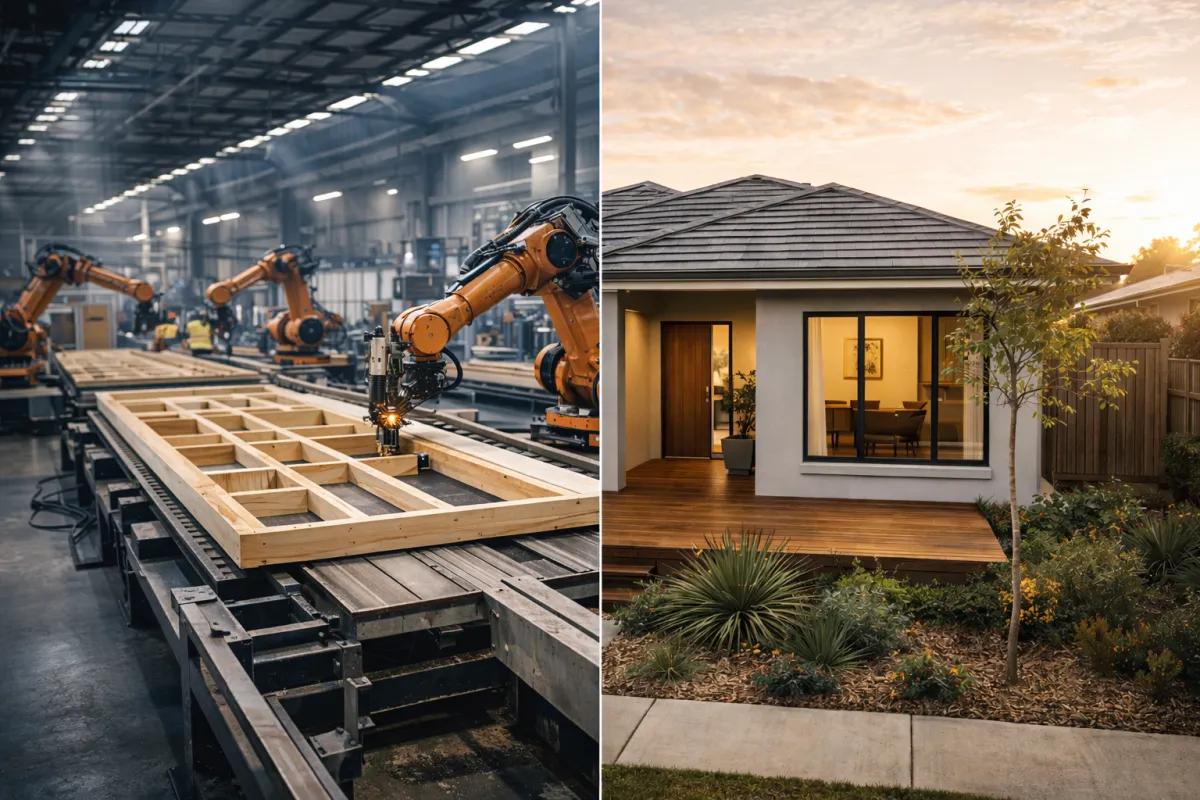
Inside the Factory: How Prefab Housing Works — And Why Australia Is Lagging Behind (Part 2 of 4)
Part 2 of 4 – How Prefab Actually Works (And Why Australia's Still Dragging Its Feet)
In Part 1, we revisited the donga — Australia's low-budget answer to housing on the run — and looked at how modular construction is being rethought for a different set of problems: housing shortages, climate stress, and the need to build faster without building worse.
This time we're getting into the mechanics. How does prefab actually work? What's driving it now that couldn't drive it twenty years ago? And why, given a fairly compelling case, has Australia barely moved?
Prefab vs Modular — There Is a Difference
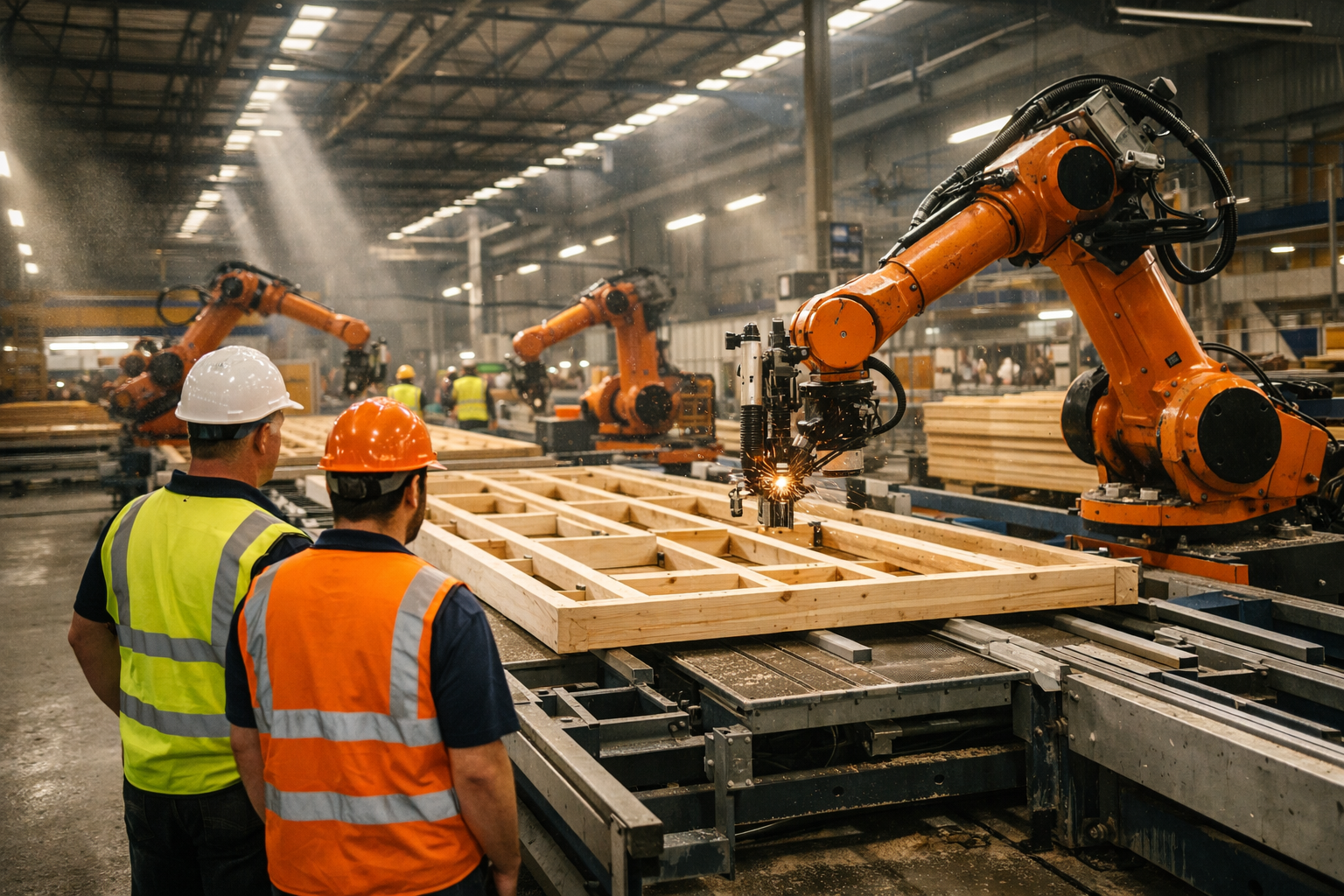
People use the terms interchangeably, but they're not the same.
Prefab covers anything manufactured off-site — wall panels, frames, structural components. Modular goes further: whole sections of the home, sometimes the entire thing, are assembled in a factory and delivered ready to install.
Dr Ehsan Noroozinejad from the University of Western Sydney puts it plainly: "Everything — from the facade, to plumbing, to wiring — is built and tested in a controlled environment before it even reaches the site."
That's a fundamentally different way of thinking about construction. The building site becomes a delivery address, not a workshop.
The Technology Driving It
Modern prefab factories aren't what you'd picture. Robotic assembly, AI-driven quality control, digital twins — a digital copy of the structure used to test and simulate performance before a single panel gets loaded onto a truck.
The results are measurable: fewer errors, faster builds, tighter tolerances, and buildings that perform better over their lifetime.
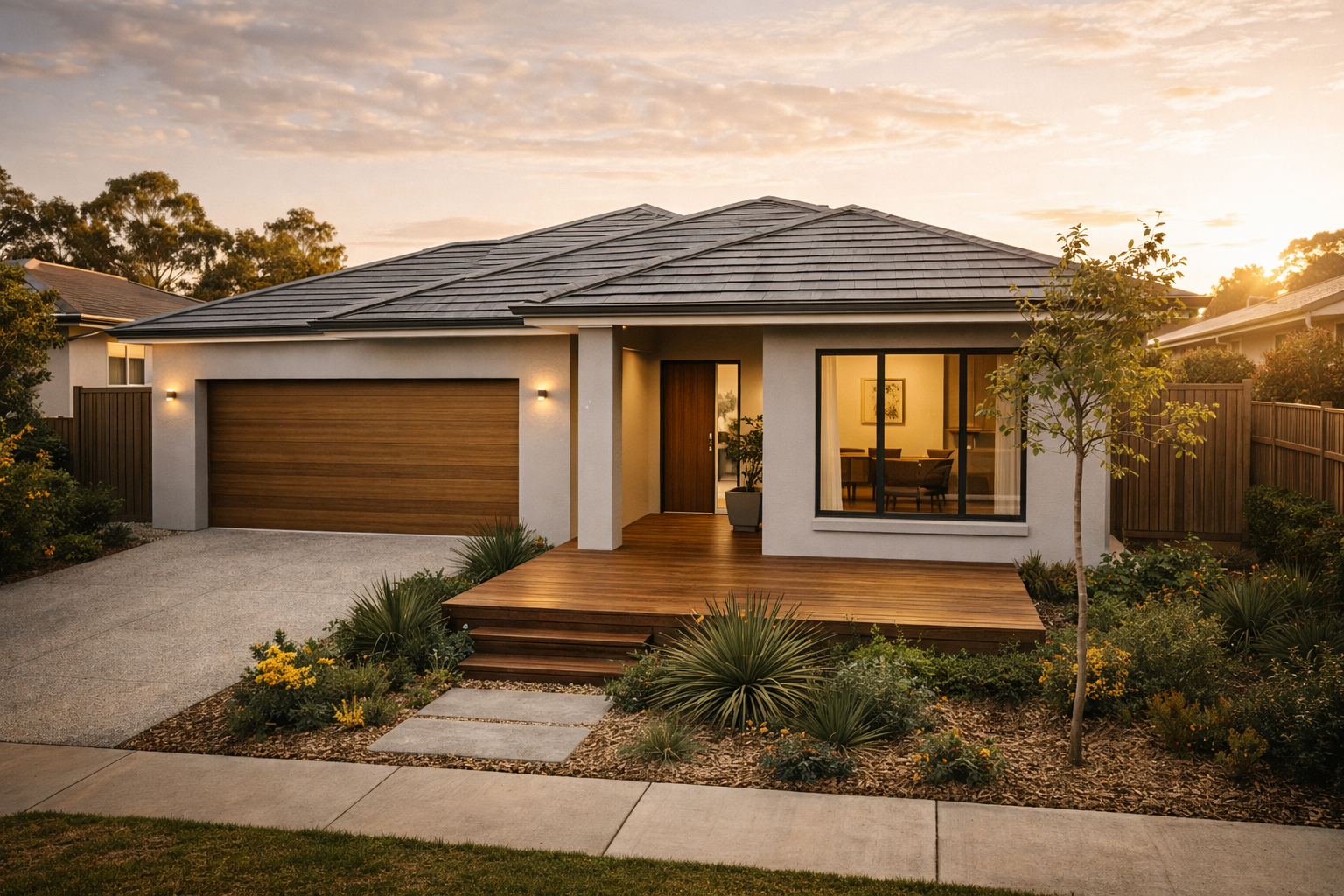
And most people walking past the finished product have no idea it came out of a factory.
So Why Is Australia Behind?
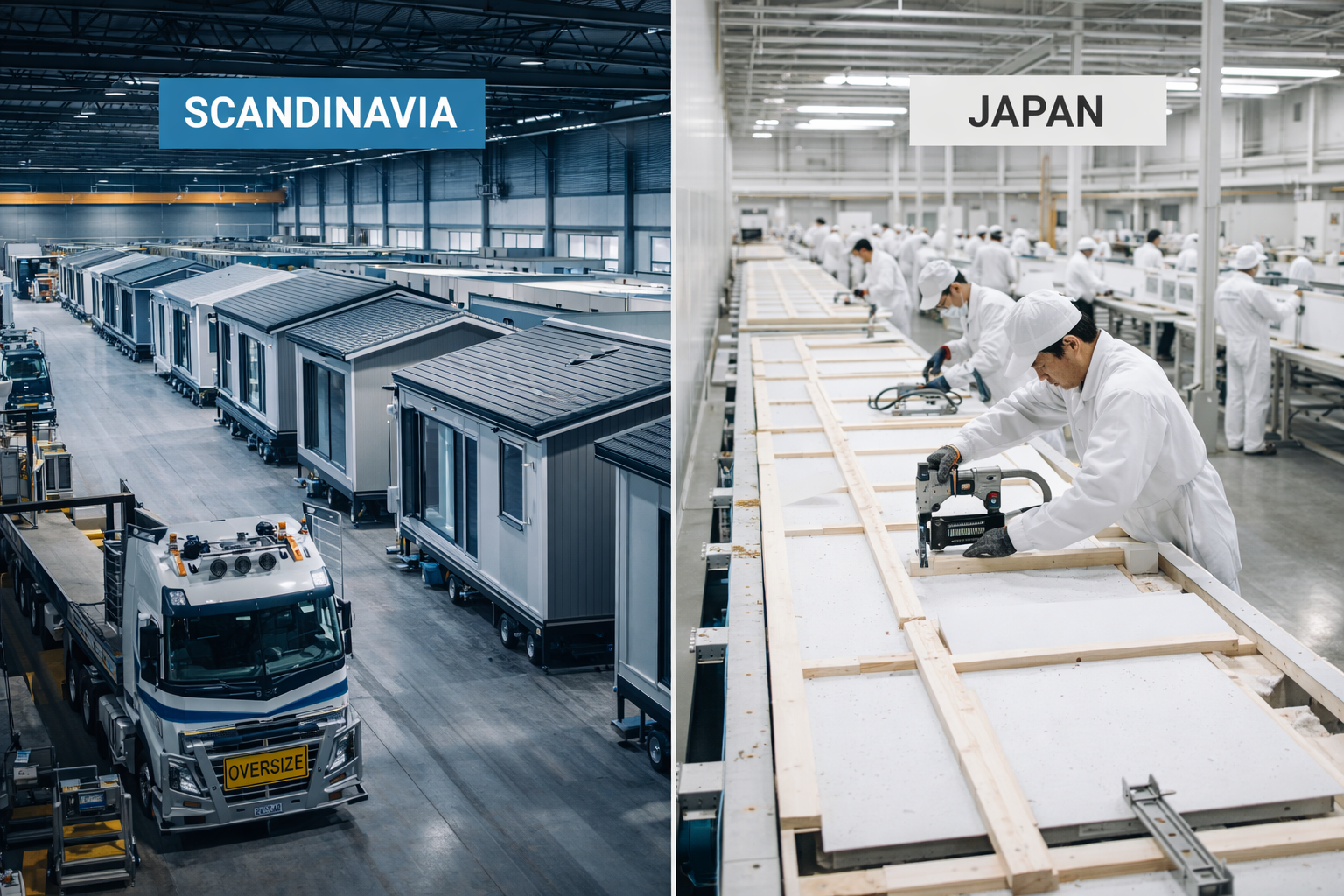
Sweden builds around 85–90% of homes this way. Japan converted former car manufacturing plants to produce high-spec residential housing. Both countries got there by building systems that support consistent, high-volume production.
Australia hasn't done that. The honest answer, according to Damien Crough from Prefab AUS, is volume. "We simply don't have the demand and volume to support large-scale prefab factories in every state."
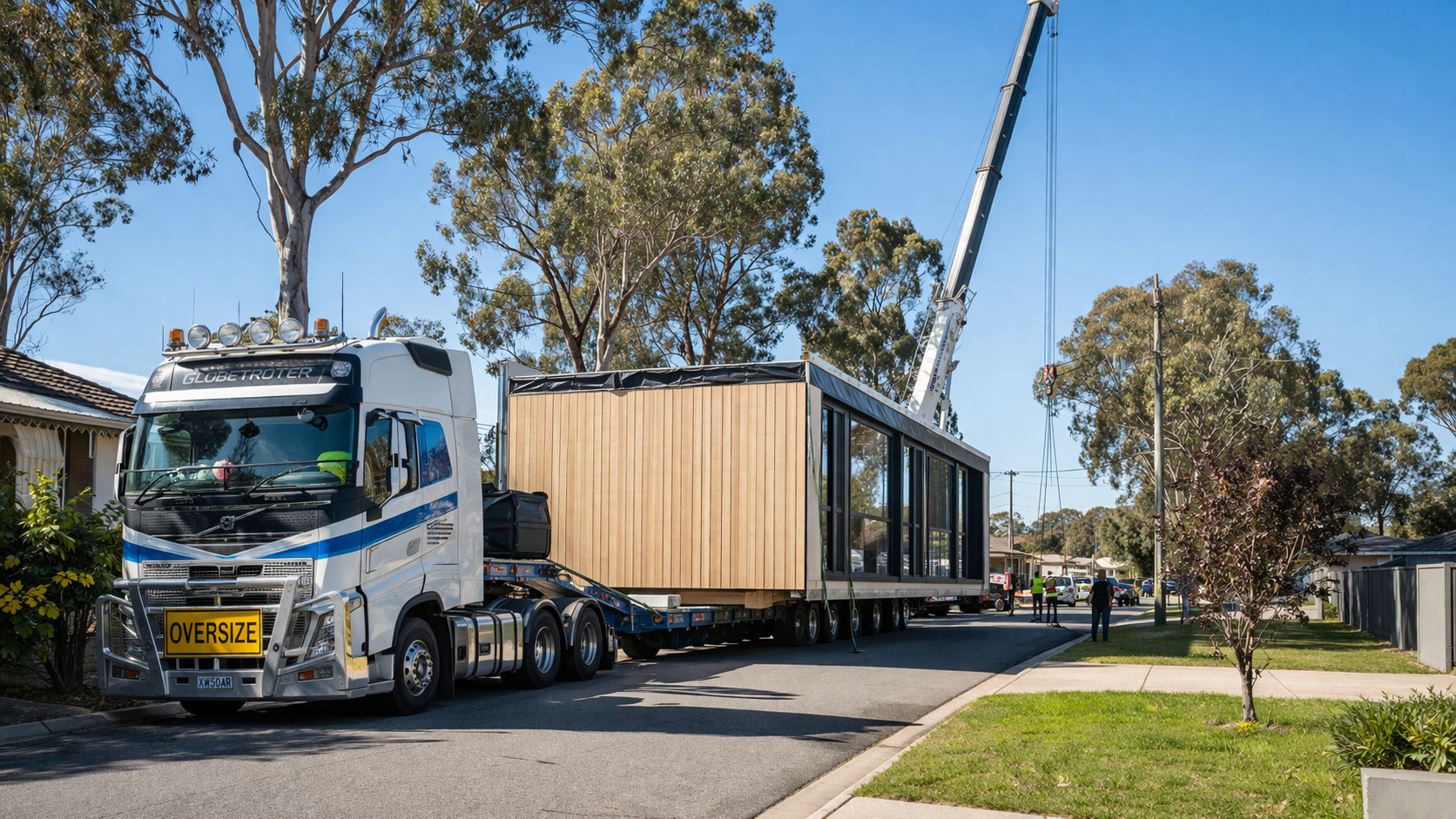
It's a chicken-and-egg problem. Without a consistent pipeline, manufacturers can't justify the capital investment. Without manufacturers at scale, you can't build the pipeline.
There's also a structural shift worth noting. In the post-WWII period, government-built homes accounted for around 16% of housing supply. That figure is now sitting at roughly 3%. The public sector used to anchor demand. It no longer does.
The Private Sector Will Have to Lead — But It Needs Certainty
Prefab could genuinely help Australia meet its National Housing Accord targets. The technology is there. The design capability is there. The expertise exists.
What's missing is demand certainty. Crough is direct about it: "It's not the government who'll deliver prefab homes, it's the private sector. But they'll only invest if there's a clear, consistent stream of work."
That's not a technology problem. It's a policy and confidence problem. And it's one that won't fix itself.
What's Coming in Part 3
We'll look at prefab and sustainability — whether factory-built homes can actually cut construction waste, lower emissions, and hold up in the kind of conditions Australian summers are increasingly delivering. Bushfires, blackouts, energy efficiency. The practical stuff.
Special thanks to Keith Barry, Senior Property Valuer at Regalvale Valuations, whose original research inspired this series.
Interested in whether prefab or modular stacks up for your next project? Get in touch — we're glad to work through the numbers with you.

Quick Links
Social Media Links