
BLOG
Prefab Homes, Construction Waste and Climate Resilience (Part 3 of 4)
Part 3 of 4 — How Modular Construction Reduces Waste and Builds Climate Resilience
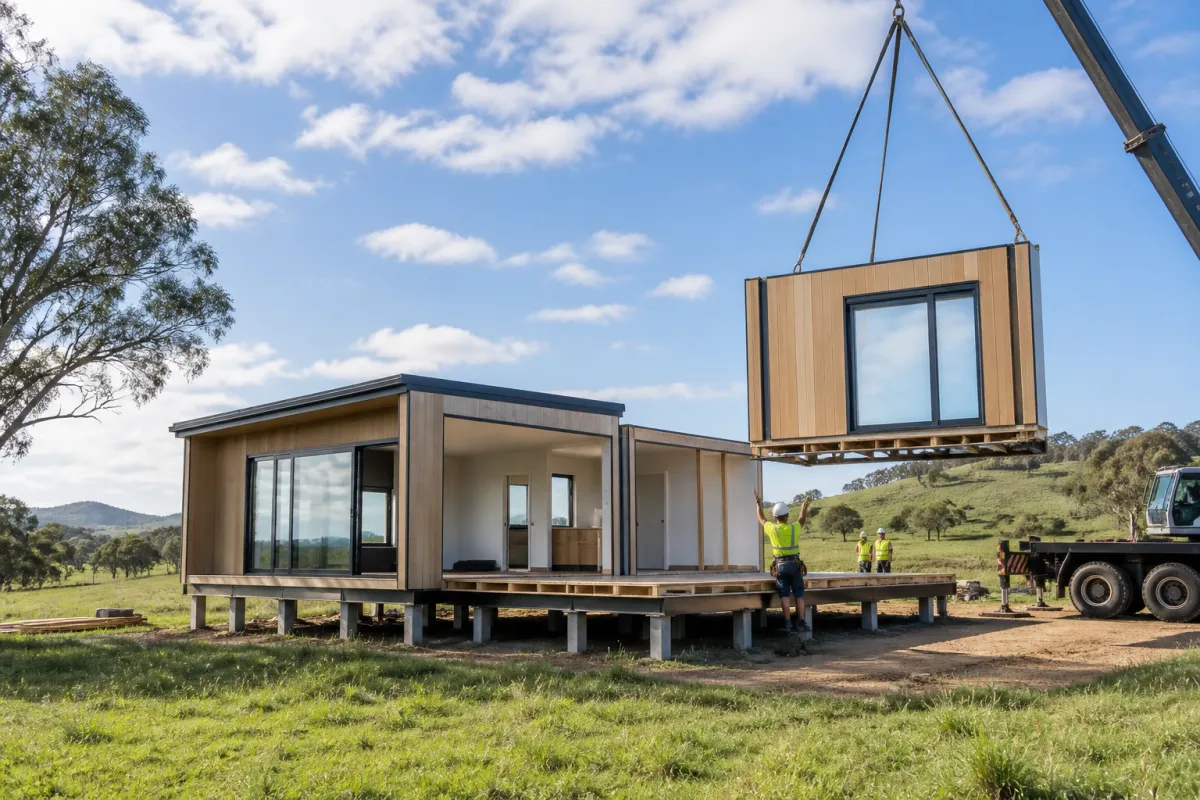
In parts one and two of this series, we looked at how the humble "donga" evolved into a serious construction methodology, and how modular homes are actually built using off-site factory processes.
Part 3 shifts to two questions that matter more than most people realise when they think about property: what happens to all the waste, and are the homes we're building today going to protect us in the climate conditions we're heading into?
The short answer to both is that prefab handles these better than traditional construction. Here's why.
The waste problem in traditional construction
Construction and demolition represent Australia's largest source of landfill waste. Residential builds generate significant greenhouse gas emissions not just over the life of the building, but at the point of construction. And the nature of on-site building — measuring, cutting, adjusting, reworking — means waste is baked into the process.
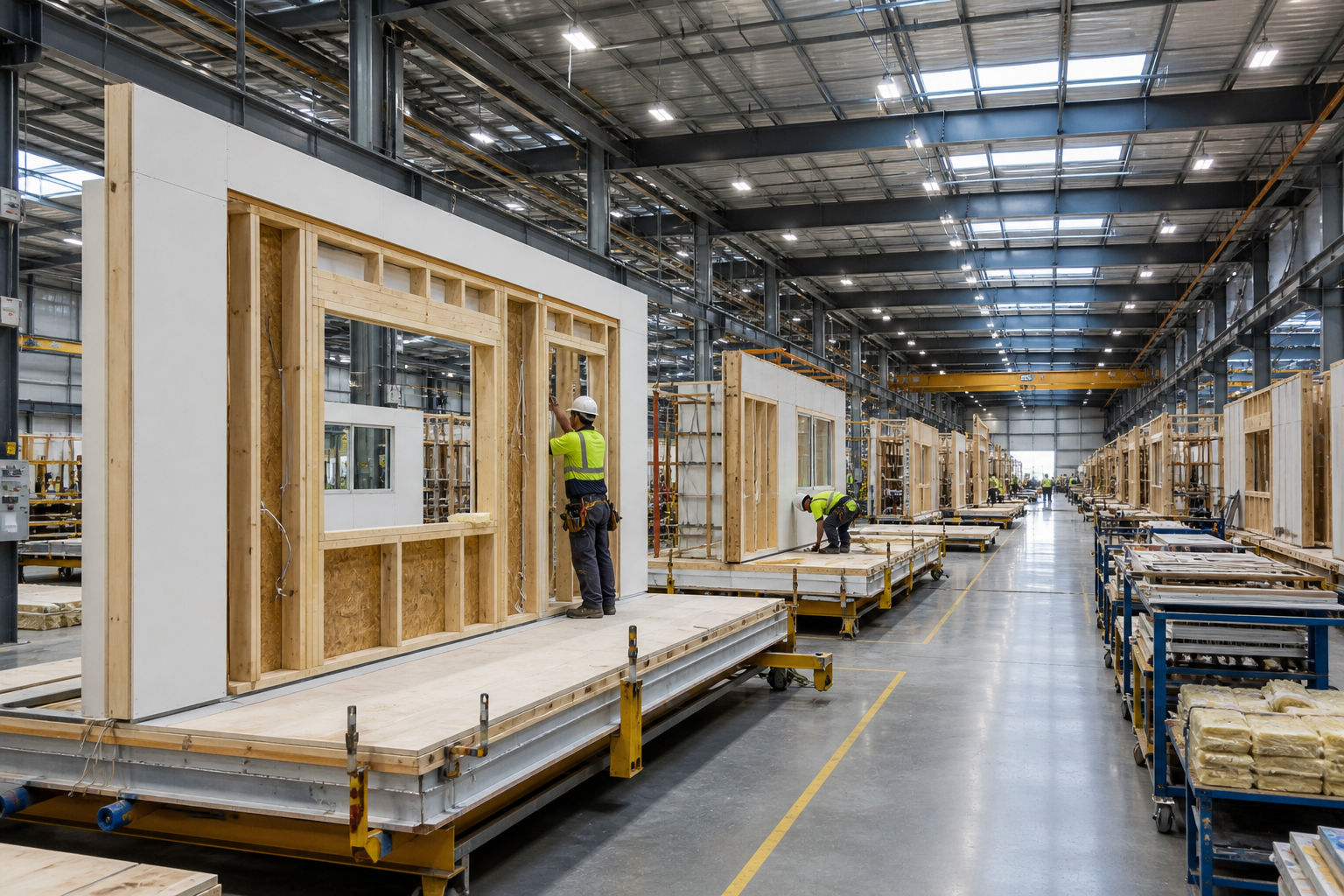
Off-site manufacturing changes that dynamic. When most of the work happens in a controlled factory environment, every material is accounted for before production begins. Offcuts get recycled within the facility. Rework drops because the planning is done upfront, not figured out on the job.
Dr Ehsan Noroozinejad from the University of Western Sydney puts it plainly: waste can be reduced close to zero, with the final product being more energy-efficient and higher quality as a result.
Matt Dingle, a Geelong-based modular startup founder, makes the point about planning discipline: prefab forces you to design systems carefully before executing them in the factory. That level of rigour rarely happens on a traditional job site, where decisions get made in real time and mistakes get covered up rather than corrected.
Climate resilience — building for conditions that are already here
This is the part of the prefab conversation that doesn't get enough attention.
Australia is already dealing with more frequent bushfires, floods, heatwaves, and extended power outages. The housing stock being built right now will still be standing in 30, 40, 50 years. The question is whether it will still be liveable under the conditions those decades will bring.
Associate Professor Lyrian Daniel from the University of South Australia frames it well: will our homes continue to protect us in the future? Can they adapt to climate extremes like heatwaves or energy blackouts?
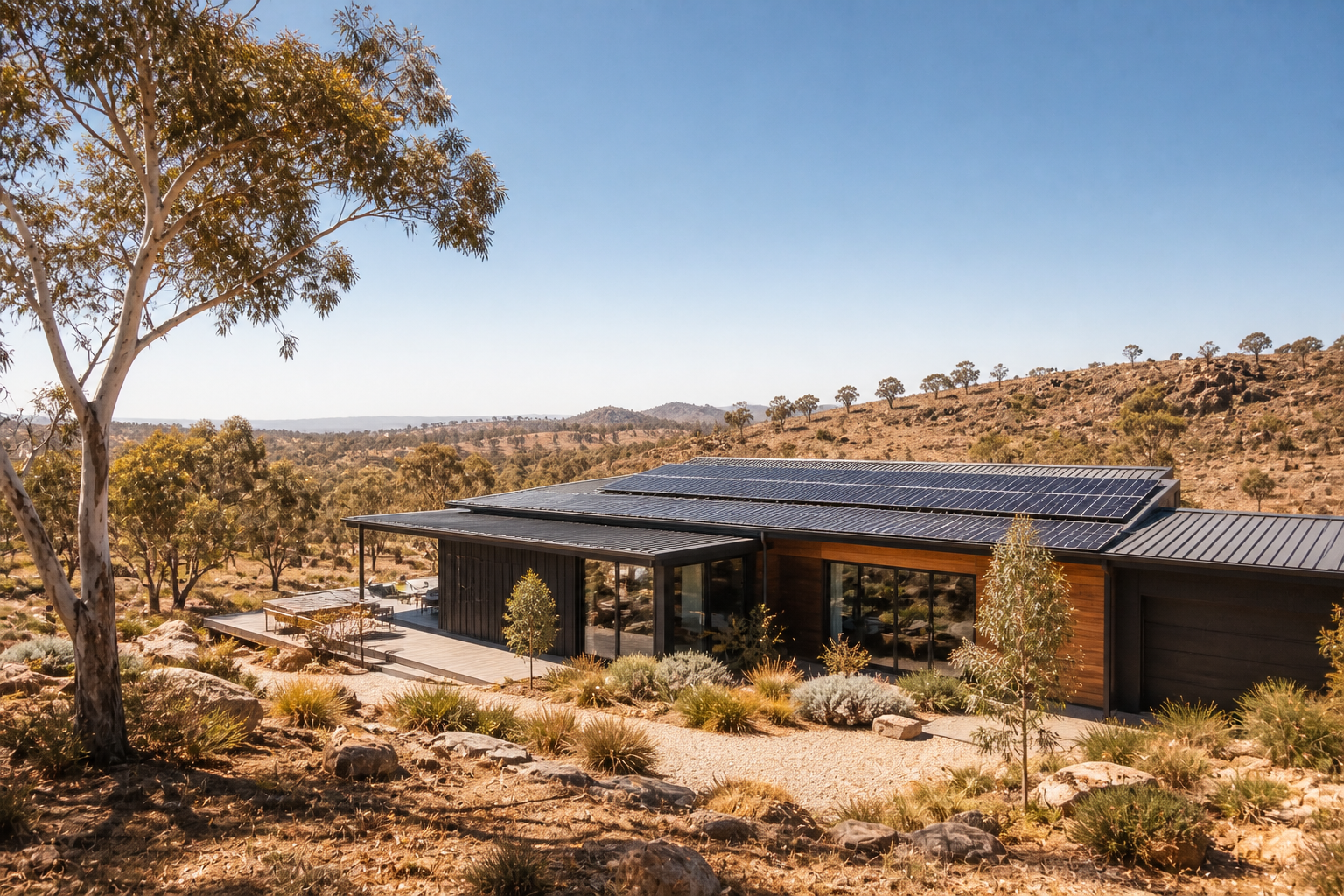
Modular construction, when designed with passive thermal performance, renewable energy integration, and structural resilience in mind, can answer that question more effectively than most site-built alternatives. Because these homes are engineered in controlled environments, energy efficiency and climate resilience aren't retrofitted — they're built in from the start.
A well-designed prefab home can stay cooler during summer blackouts, use less energy across the year, require less maintenance over its lifespan, and perform better structurally during extreme weather events. These aren't theoretical benefits. They're outcomes of the design and manufacturing process itself.
The system hasn't caught up yet
Despite the advantages, prefab still sits at the edge of the mainstream rather than the centre of it. The reason isn't the technology — it's the systems built around traditional construction.
Finance is the biggest constraint. Banks lend against what's happening on the land. Progress payment structures are designed around on-site build stages. A home being manufactured in a factory 500 kilometres away doesn't fit neatly into that model, which creates genuine borrowing challenges for buyers and developers alike.
Planning and regulatory frameworks have the same issue. Most approval processes assume site-built construction. Prefab often has to work around systems that weren't designed with it in mind.
Until those structures evolve, the full potential of modular construction stays partially locked.
What's coming in Part 4
The final part of this series gets into the finance and affordability question directly — why mortgages for prefab homes are harder to obtain, what the cost barriers look like at scale, and what a better future for modular housing could actually look like if the system catches up to the product.
If you're thinking about how modular construction fits into a broader property investment strategy, that's a conversation worth having. Get in touch.

Quick Links
Social Media Links