
BLOG
Prefab Housing in Australia: The Financial Roadblocks and the Path Forward (Part 4 of 4)
Part 4 of 4 — Affordability, Mortgages, and the Future of Modular Living
Over the first three parts of this series, we covered how modular construction evolved, how prefab homes are actually built, and why off-site manufacturing handles waste and climate resilience better than traditional methods.
Part 4 gets into the part that stops most of the conversation before it starts: money.
Specifically, why it's harder to finance a prefab home, what that means for buyers and manufacturers, and what needs to change for the sector to scale.
Why banks don't lend well on prefab
Traditional construction finance is built around a simple logic. The bank holds security over the land. As the build progresses on site — slab, frame, lock-up, fit-out — funds are released in stages. The lender can see value being added to the asset it has security over, and it releases money accordingly.
Prefab breaks that model entirely.
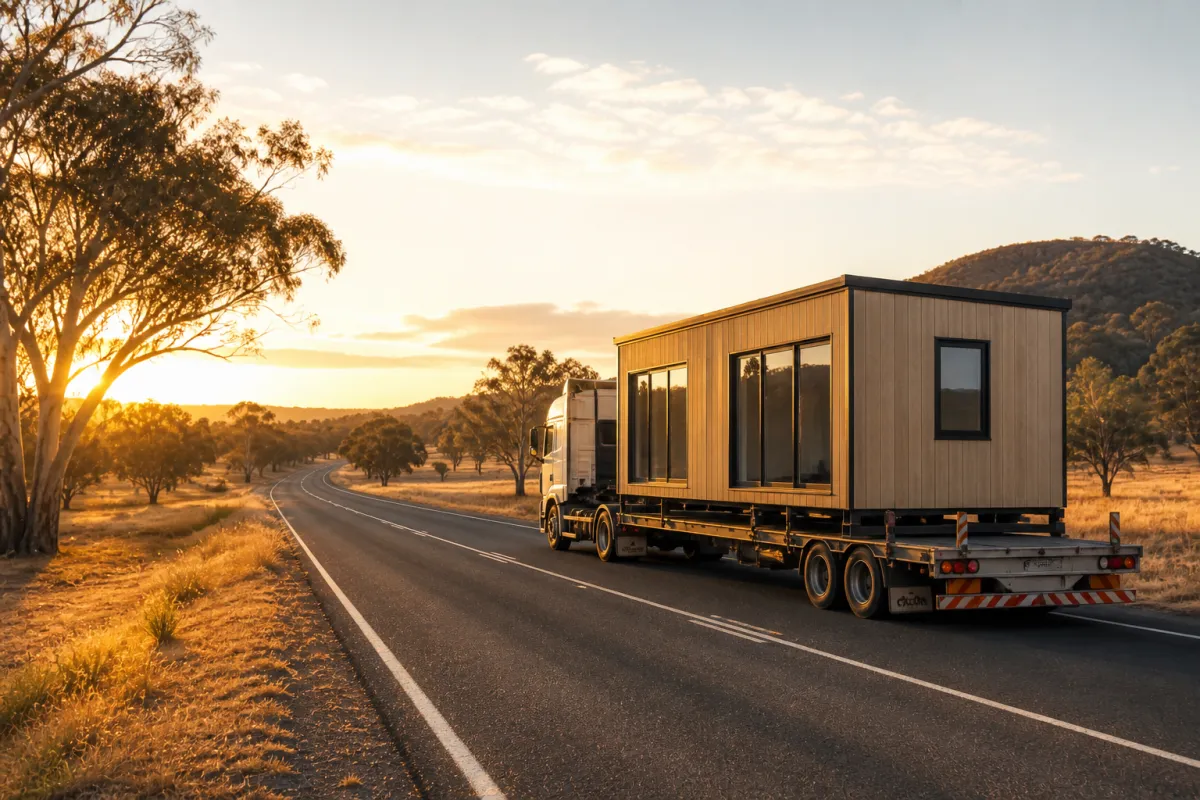
Most of the construction happens in a factory, off the land the bank cares about. By the time the home is delivered to site, it can be 80 to 100 percent complete. But because that value was created somewhere the bank couldn't observe or lend against, most lenders won't release funds during the manufacturing phase.
The consequences flow in both directions. Buyers are often required to put up large deposits before they have anything on the ground. Manufacturers carry the full cost of building a home before receiving meaningful payment. That cash flow pressure limits growth, limits the ability to take on volume, and keeps the sector smaller than it should be.
As Damien Crough from prefabAUS notes, this dynamic devalues the business model and makes it genuinely hard to grow.

A contractual foundation is starting to form
One of the practical problems compounding the finance issue has been the absence of standardised contracts for modular home purchases. Without clear documentation covering payment schedules and risk allocation, lenders had little framework to work from even when they wanted to engage.
That's changing. Industry collaboration — including involvement from Commonwealth Bank — has produced a modular housing contract designed to give lenders and buyers clarity around how transactions are structured. It's not a complete solution, but it's a meaningful step toward making prefab more legible to the finance sector.
Broader policy and regulatory frameworks will need to follow. A contract helps. A system that understands and accommodates the asset class is what actually unlocks scale.

Is prefab actually cheaper?
The honest answer is: not consistently, not yet.
Modular construction typically costs slightly more upfront than a comparable site-built home. The value proposition sits elsewhere — faster delivery, lower ongoing maintenance, higher energy efficiency, better build quality, and less waste across the construction process.
Cost parity, or genuine savings, comes with volume. When manufacturers can produce at scale, per-unit costs drop. That hasn't happened broadly in Australia yet because the demand and finance conditions needed to drive that volume haven't been in place.
Matt Dingle from modular manufacturer FormFlow puts the ambition clearly: modular shouldn't just match traditional building on cost — it should beat it. The product quality and process efficiency are already there in principle. The economics follow scale, and scale follows a system that supports it.
Where the sector goes from here
Prefab isn't a niche product waiting for its moment. It's a construction methodology with real advantages in quality, speed, sustainability, and climate resilience that is being held back by systems designed around a different way of building.
What the industry needs is relatively straightforward to describe, even if it's complex to deliver: lending practices that reflect how prefab actually works, planning frameworks that don't force modular projects to navigate approvals designed for site-built homes, consumer awareness that separates the product from outdated associations, and enough volume to bring unit costs down to where they need to be.
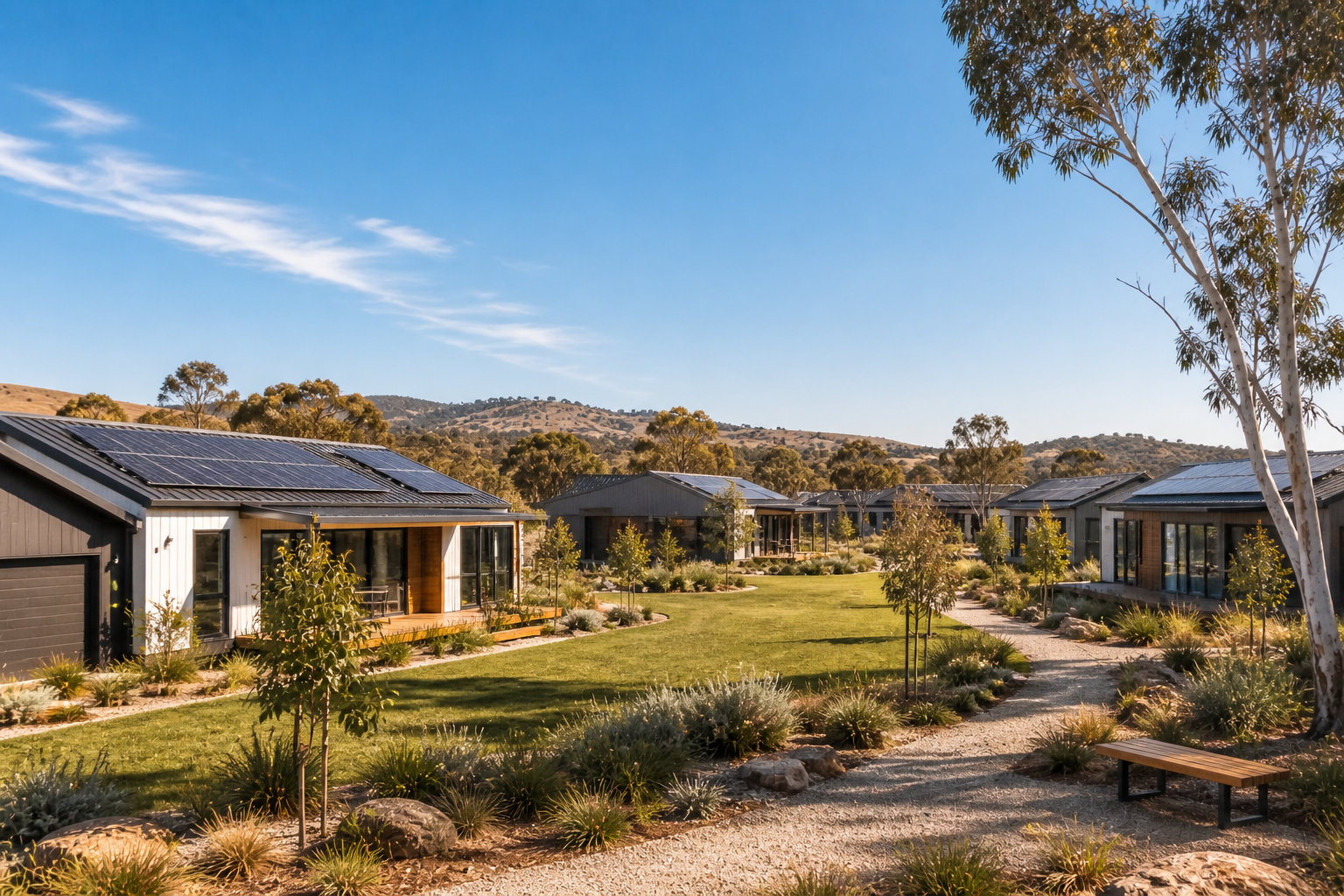
Research underway by Matt Dingle in partnership with Deakin University into modular communities in regional Victoria points at what's possible. Climate-resilient, scalable, designed from the ground up as a community rather than a collection of individual dwellings. If that model works, it has implications well beyond regional Victoria.
Younger buyers are already more open to smaller, more efficient homes. The cultural shift is happening. The market and the systems around it need to follow.
Closing the series
Across these four parts, the picture that emerges is consistent. Prefab and modular construction offer genuine advantages over traditional building in speed, quality, waste, and climate performance. The barriers aren't technical. They're structural — finance, regulation, planning, and scale.
None of those are insurmountable. Some are already starting to move.
If you're a buyer or investor thinking about how modular construction fits into a broader property strategy — whether as a development play, an investment thesis, or simply a smarter way to think about what you're buying — it's worth understanding the sector properly before the market catches up to it.

Quick Links
Social Media Links